
Long-Term Investing Strategy: How to Research a Stock Before You Buy
A successful long-term investing strategy does not begin with a stock tip, a social media post, or a price chart. It begins with research.
That is where many investors go wrong. They buy because a stock is popular, because the chart looks strong, or because someone they trust sounds confident. But if you do not understand the business, the financials, and the valuation, you do not really own the investment. You are borrowing conviction from somebody else.
Long-term investing works best when you know exactly what you own and why you own it.
Start With the Business, Not the Stock Price
Before you look at valuation ratios, analyst estimates, or recent price action, ask one simple question:
What does this company actually do?
If you cannot explain the business model in plain English, you probably should not invest yet.
A strong business is usually easy to describe:
- How it makes money
- Who its customers are
- Why customers keep buying
- What gives it an edge over competitors
- What could go wrong over the next five to ten years
This step matters because a cheap stock attached to a weak business is not a bargain. It is often a trap. Great investing starts by identifying companies with durable business models, real demand, and the potential to remain relevant for years.
Read the Right Sources
If you want to build real conviction, go to the source.
That means reading company filings and listening to management, not just consuming commentary from other investors. A strong research process should include:
1. Annual Reports (How to Read a 10-K Efficiently)
The annual report gives you the big picture. It explains the business, the risks, the segments, the strategy, and the financial performance over a full year.
2. Quarterly Reports
Quarterly reports help you track what is changing now. Is revenue accelerating? Are margins improving? Is management still executing? (You can access annual and quarterly reports in 1000xStocks - https://1000xstocks.com/sec-filings/ )
3. Earnings Calls
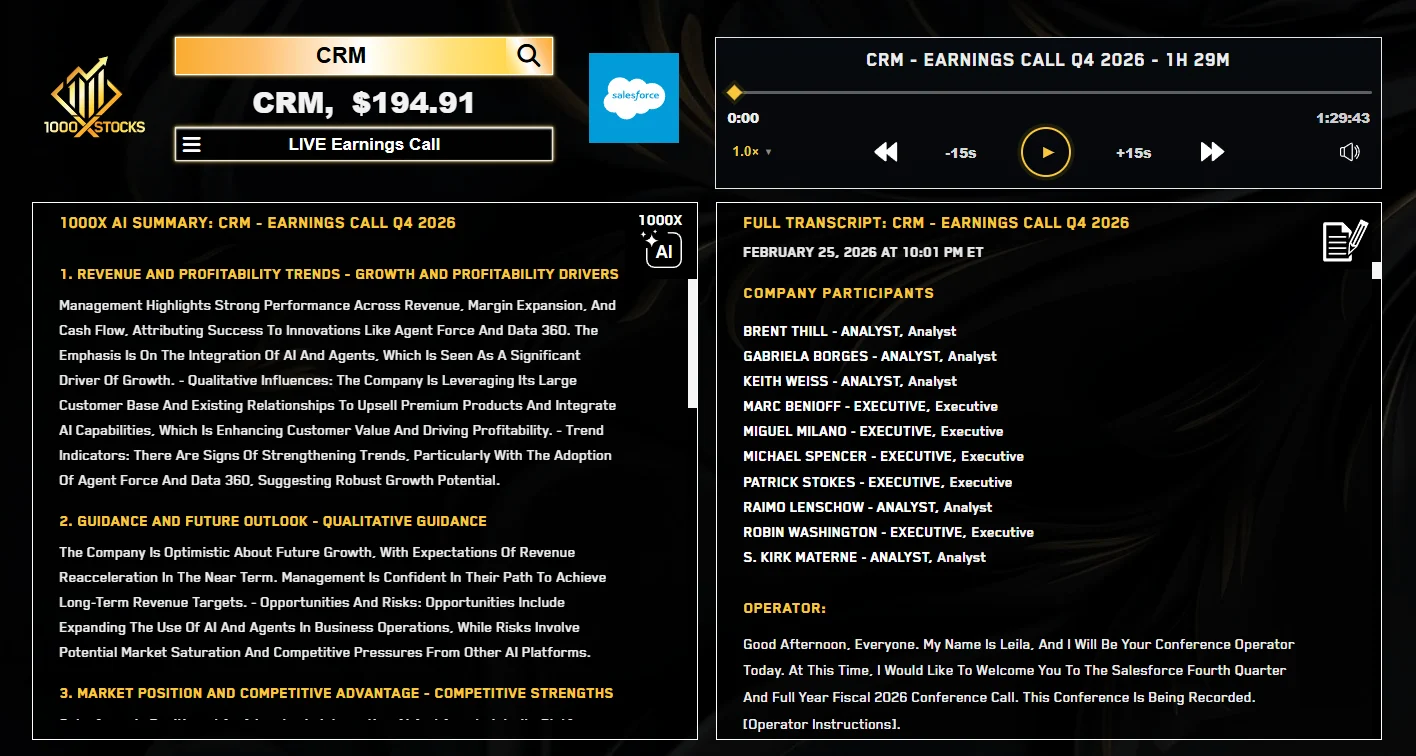
Conference calls are incredibly valuable because you hear how management explains performance, answers questions, and frames future priorities. Over time, this helps you separate disciplined operators from storytellers. You can listen to earnings calls on 1000xStocks (including AI summaries).
4. Investor Presentations
These can help you understand the company’s priorities, market opportunity, and strategic roadmap. Just remember they are marketing documents. Use them as context, not gospel.
Focus on the Numbers That Actually Matter
A long-term investing strategy should prioritize business quality over noise. That means looking at financial trends that reveal durability, not just excitement. (How to Read Financial Statements for Stock Analysis)
Here are the key areas to study:
Revenue Growth
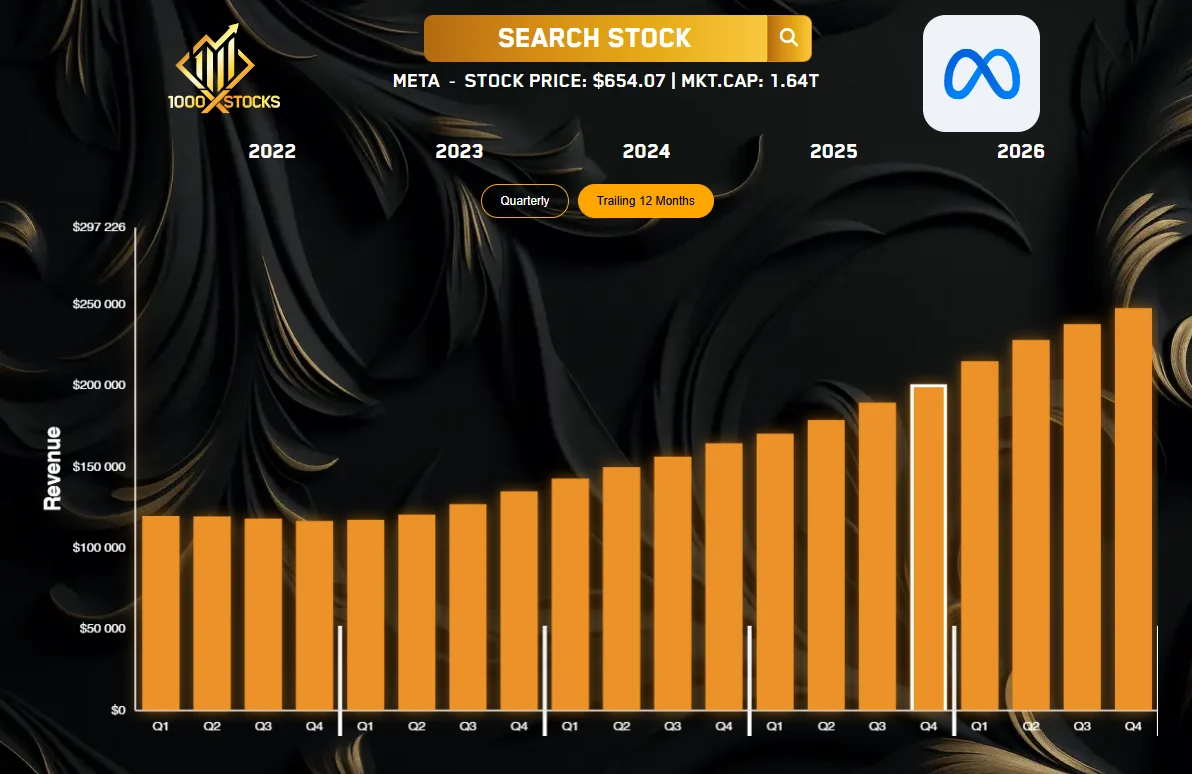
Is the company growing consistently, or is growth all over the place? Strong companies usually show a pattern. Weak companies often show bursts of growth followed by sharp slowdowns.
(META REVENUE)
Margins (Why Margins Matter More Than Revenue in Long-Term Investing)
Revenue tells you how big the business is getting. Margins tell you how good the business really is. If a company grows revenue but cannot convert it into profits, free cash flow, or reinvestment capacity, the story may not be as strong as it looks.
Balance Sheet Strength
A good business with too much debt can become a bad investment. Check cash, debt, and liquidity. Strong balance sheets create flexibility. Weak ones create fragility.
Free Cash Flow
Accounting profits matter, but cash matters more. Free cash flow shows whether the business is actually producing money after the costs of running and maintaining it.
Share Count
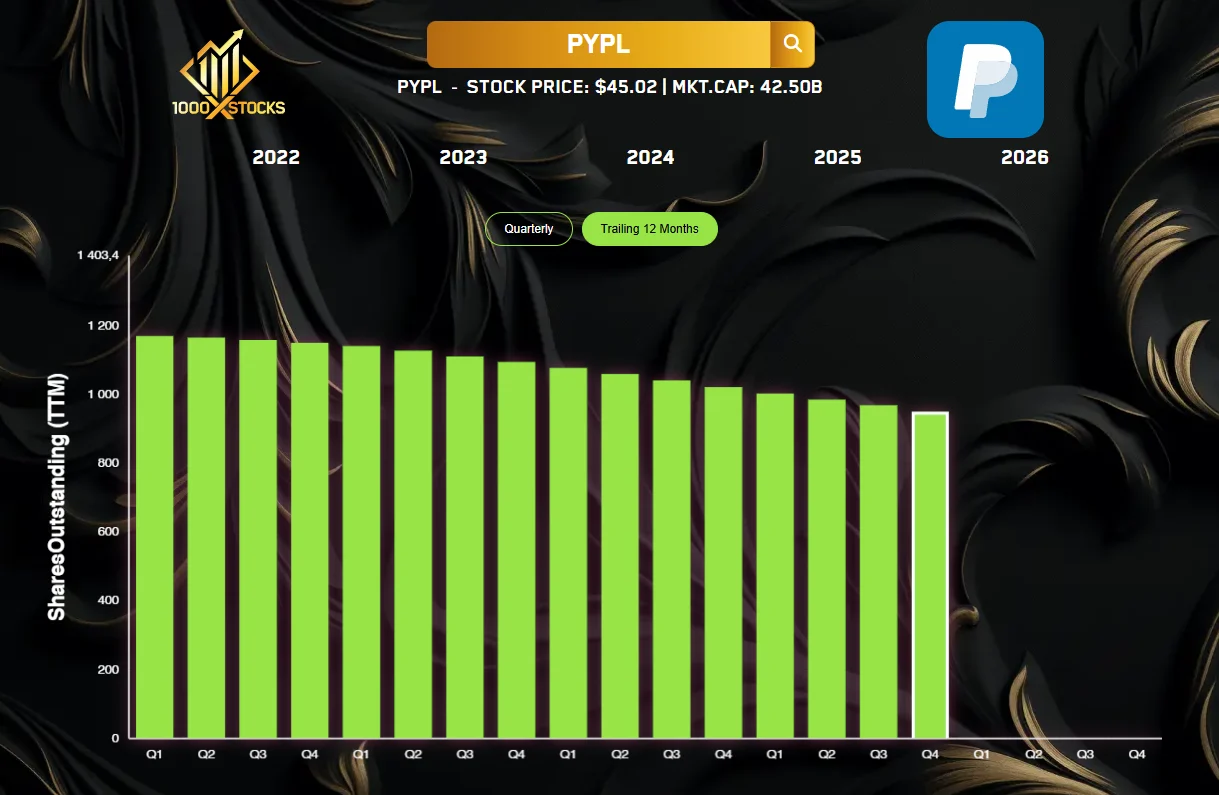
If a company keeps issuing more shares, your ownership gets diluted. A business can grow and still fail to create strong per-share returns if dilution is constant.
(PYPL SHARE COUNT)
Ask Why the Business Can Stay Strong
This is where qualitative research matters.
A stock is not just numbers. It is ownership in a real business operating in a competitive world. Ask:
- Does the company have a strong brand?
- Are switching costs high?
- Does it benefit from network effects?
- Is the product mission-critical?
- Does it have recurring revenue?
- Can management reinvest capital intelligently?
The best long-term investments usually combine business quality with management discipline.
Valuation Still Matters
Even a great company can be a poor investment if you pay too much. (What Is a Reasonable P/E Ratio? How to Match Valuation to Earnings Growth)
Valuation should come after you understand the business and the financials. Once the company checks out, then ask:
- What multiple is the market assigning today?
- How does that compare with growth, margins, and peers?
- What assumptions are already priced in?
- Is there enough upside if the business performs well?
Long-term investors do not need the perfect entry price, but they do need a reasonable one.
(ADBE EMPTY MODEL)
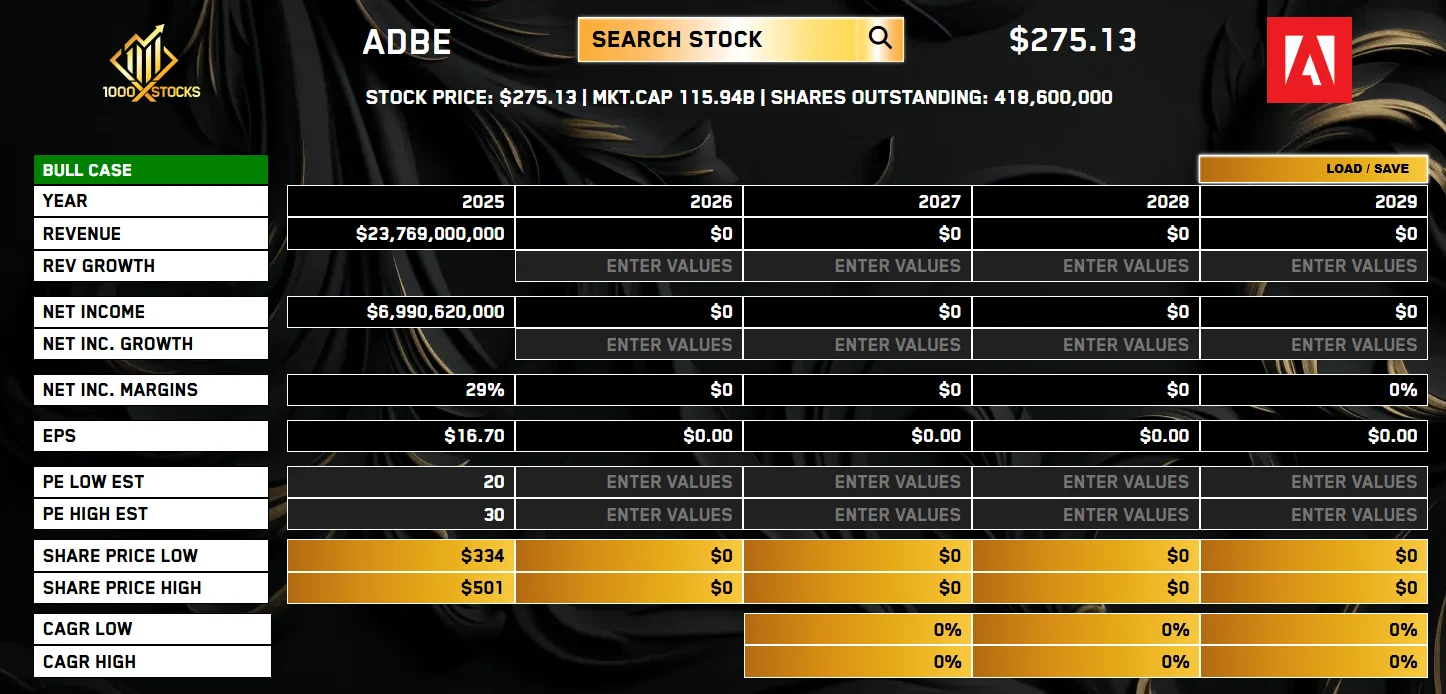
You can build projections in 1000x , and if you need to learn how, you can apply for Private Group
Build Conviction Before Volatility Arrives
Every investor loves a stock when it is going up. The real test comes when the stock drops 20%, 30%, or more. (Should You Sell a Stock After It Doubles? A Better Long-Term Investing Framework)
That is when borrowed conviction disappears.
If your research was shallow, fear takes over. If your research was deep, you can think clearly. You may still decide to sell. But it will be because the thesis changed, not because the market got loud.
Final Thoughts
A real long-term investing strategy is simple, but not easy:
Understand the business.
Read the filings.
Study the financials.
Evaluate the moat.
Check the valuation.
Build conviction before you buy.
That process takes time. But that is exactly why it works. Most people will not do the work. The investor who does gains an edge that cannot be copied by hype, noise, or short-term emotion.