
What Is a Good Annual Return for a Long-Term Investor?
One of the most important questions in investing is also one of the most misunderstood:
What is a good annual return to aim for?
A lot of investors end up on one of two extremes. On one side, they set the bar too low. They assume that if the broad market has historically done around 9% over long periods, then aiming for 9% to 12% is good enough. On the other side, they get caught in unrealistic expectations after a hot year, a speculative run, or a lucky trade, and start believing 50% or 100% annual returns are repeatable.
Neither mindset is ideal.
A better framework is to think in terms of long-term, sustainable compounding.
The Wrong Benchmark Problem
If your goal is simply to match index-like returns, there is nothing wrong with that. But if you are spending meaningful time researching individual companies, reading filings, studying financials, and building conviction, the goal should be to outperform the average investor. Otherwise, the extra effort is not producing enough value.
At the same time, a few exceptional years should not distort your expectations. Great years happen. Speculative years happen. But long-term investing should be built around what is repeatable, not around what was possible in one unusually strong stretch of the market.
A Practical Return Framework
A useful way to think about long-term returns is this:
15% annualized is respectable.
20% annualized is strong.
25% annualized is excellent.
30% annualized is an ambitious North Star.
That kind of framework keeps you ambitious without becoming delusional. It also gives you a way to plan realistically.
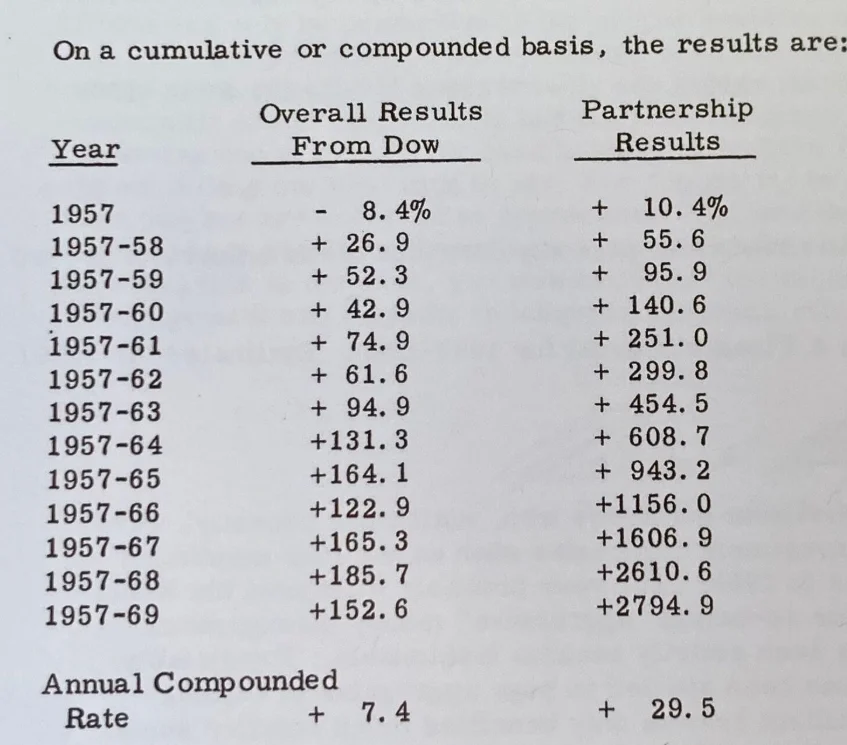
(BUFFETT PARTNERSHIP RETURNS 29.5% CAGR)
Because once you know your starting capital, contribution rate, and target return range, you can start answering practical questions:
How long will it take to build a seven-figure portfolio?
What monthly contribution level is needed?
How much does improving your skill actually matter?
Those are much better questions than simply dreaming about becoming rich someday.
The Real Goal Is Sustainability
The most important word in this entire conversation is sustainable.
A portfolio can post massive gains in a speculative year and still be built on weak foundations. If the returns came from leverage, luck, hype, or low-quality companies with no bedrock, that is not the same as durable investing skill. The best long-term investors are not trying to win one year. They are trying to build a portfolio that can compound through bull markets, corrections, and ugly periods alike.
That means asking harder questions:
Are my returns based on great businesses or hot stories?
Do I understand what drove performance?
Could this portfolio survive a rough market year?
Am I positioned for a decade, or just for momentum?
Those questions matter far more than a flashy screenshot.
Why 20% Changes Everything
The difference between 10%, 15%, 20%, and 25% annualized returns is enormous over time.
That is why improving your investing process matters so much. A modest edge, applied over many years, completely changes portfolio outcomes. Small differences in annual return do not stay small for long when compounding takes over.
This is also why competent long-term investors should care so much about business quality, valuation discipline, margins, and management. Those are the levers that make stronger compounding possible.
Final Thoughts
A good annual return for a long-term investor is not about fantasy, and it is not about settling for average.
It is about aiming high enough that the work is worth it, while staying grounded enough that the process remains repeatable.
A strong framework is:
- 15% as a decent long-term floor
- 20% as a solid target
- 25% as excellent
- 30% as a stretch goal
The real magic is not in having one amazing year.
It is in building the kind of portfolio and skill set that can produce very good years for a very long time.